607 Foothill Blvd.
P.O. Box 1310 La Cañada,
CA 91012
Thoughtful pruning. More room for everyday life.
Tree trimming and pruning in La Crescenta, La Cañada Flintridge, and Glendale. From branches over your roof to deadwood and crowded growth, we help you plan the right work for your trees and property.
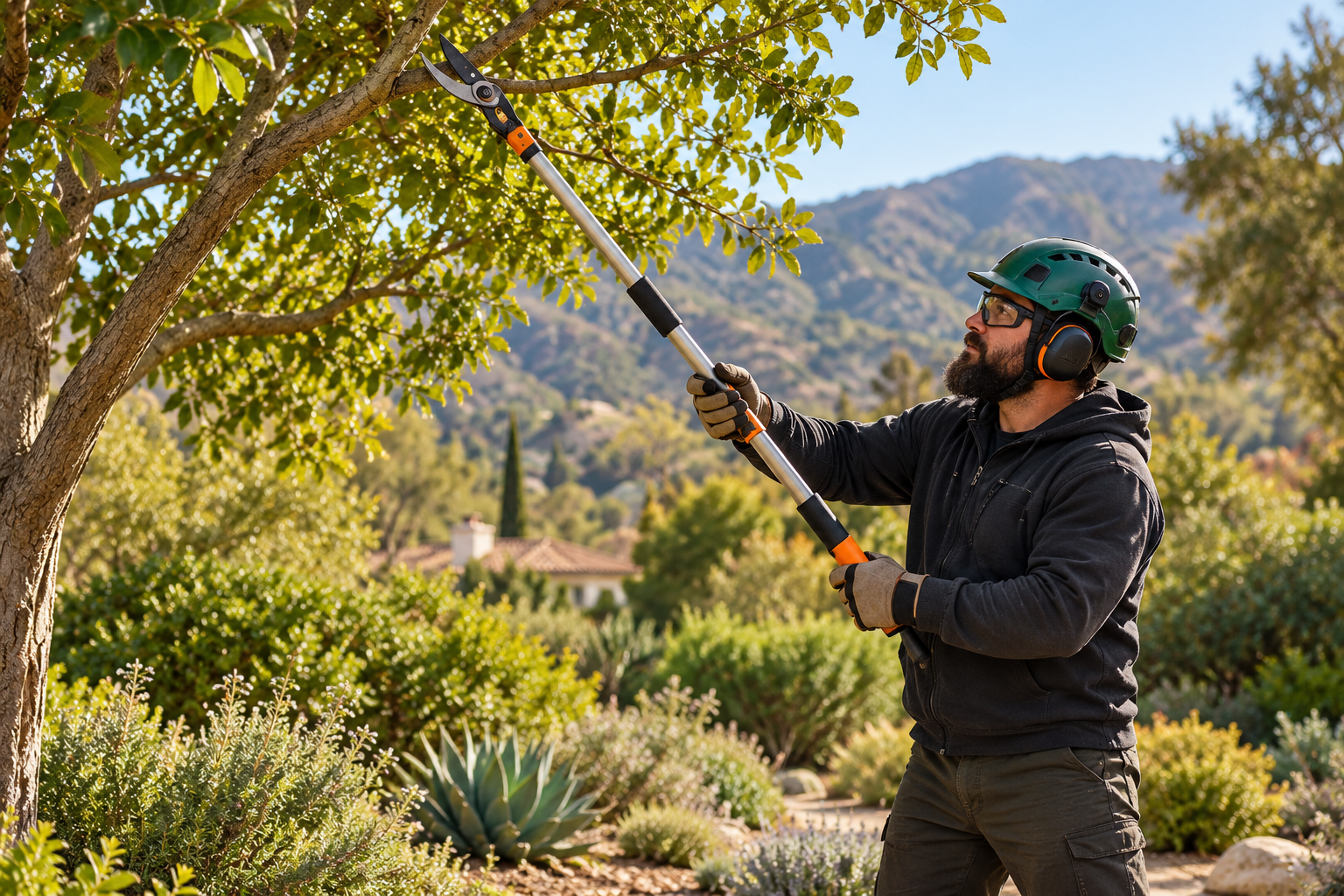
Local experience. Purposeful pruning. Crescenta Valley Tree Service has cared for foothill-area trees since 1983. We discuss what you want to improve—such as branch clearance, deadwood, or crowded growth—and assess the tree and its surroundings before defining the pruning work in your estimate.
Trimming is often used to describe improving a tree’s shape or clearance. Pruning is the selective removal of branches for a defined purpose. The right approach considers species, age, condition, and surrounding space.
More cutting is not always better. Excessive pruning and topping can damage a tree. We discuss the objective and appropriate scope before work begins.
The trees: number, size, species, condition, and the amount of selective work needed.
The site: gates, parking, hillside access, nearby buildings, landscaping, and equipment access.
The scope: clearance goals, debris handling, scheduling, and any permissions that need to be resolved.
Tell us about these details when you request a visit. We assess the property before confirming the work and expected timing.
Explore our Private Residential Tree Trimming and Pruning project for an example from our own work. Every property has different access, clearance, and tree-care needs.
Based in the foothill communities, we provide tree trimming and pruning in the areas below. Tell us your location and property access when you contact us.
Timing depends on the species, condition, growth cycle, and purpose of the work. Dead or damaged branches may need attention sooner than routine shaping. We assess the tree before recommending a schedule; one season is not right for every tree.
The estimate depends on tree size and number, branch condition, the work needed, access, slope, nearby structures, equipment needs, and debris handling. Contact us for a free estimate based on your property rather than a generic price range.
There is no single schedule for every tree. Species, age, previous pruning, growth, and clearance needs all matter. A tree may need selective work, periodic assessment, or no pruning at the time of the visit.
Requirements depend on your location, tree ownership, species, size, and proposed work. Protected trees and street trees may have additional restrictions. Check with the responsible city or county before work begins. For questions about your oak tree, request a free estimate.
Selective reduction may be appropriate for some trees, but the tree’s structure, condition, and available branches limit what can be done responsibly. Topping is not a substitute for a considered pruning plan. We discuss realistic options after assessing the tree.
Keep clear of branches touching or close to electrical lines. Contact the electric utility before arranging work in that area. Do not attempt to cut or move the branches yourself.
Yes. Photos can help show the tree, access, and nearby structures. They may not reveal every condition, so an onsite assessment may still be needed to confirm the scope, estimate, and timing.
Discuss debris handling and cleanup when arranging your estimate so the agreed scope is clear. Let us know about narrow gates, limited parking, steep slopes, or areas you want protected.
Tell us what is overgrown, damaged, or getting in the way. Photos can help explain the project, and an onsite visit may be needed for an accurate estimate.
For urgent tree concerns, call us directly.